
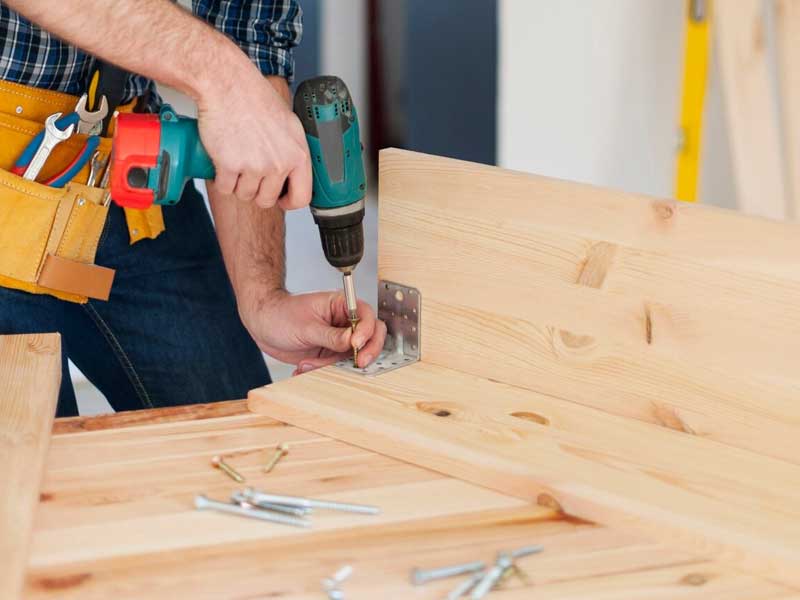
Wood pervades our homes. Sticking doors, gapped or damaged skirting, architraves pulling away, creaky stairs, and cabinets with broken hinges all compromise your home’s appearance and function. These carpentry problems accumulate, leading to neglect that affects daily life and property value. A Handy Hand delivers expert carpentry services in Enfield, Barnet, Haringey, and North London. We adjust sticking doors, replace damaged skirting, fit new architraves, and repair wobbly bannisters, handling the repairs that keep homes efficient and appealing. Expect skilled work, fair prices, and genuine pride in each result.
Call us on 020 8103 5151 for a free quote.
Doors frustrate more than almost any other household feature. Sticking, scraping, failing to latch, rattling frames, or refusing to stay open or closed render doors obstacles rather than conveniences. Most door issues have clear solutions.
Doors stick for several reasons. Humidity swells timber seasonally. Houses settle, and frames shift. Hinges wear and let doors drop. Paint accumulates on edges over the years of decorating. Pinpointing the cause determines the right fix.
Minor sticking often responds to hinge adjustment. Tightening loose hinges or repositioning them slightly can restore proper door swing without removing material from the door itself. We check hinges first before considering more invasive solutions. Planing door edges removes material where doors bind frames. This requires precise judgment of how much material to take and where. Removing too much creates gaps; too little leaves sticking. We proceed conservatively and continuously test the operation for a precise fit. Seasonal sticking sometimes resolves as humidity changes. Doors that stick in humid summer months may function perfectly in drier winter conditions. We can advise whether waiting is advisable or whether an adjustment will provide year-round relief.
Doors that fail to latch often suffer alignment issues, worn latches, or strike plate faults. The latch must engage fully with the strike plate to close properly. Misalignment prevents this engagement. Strike plate repositioning solves many latching problems. A strike plate is the metal piece attached to the door frame that receives the latch. Moving the plate slightly, enlarging the opening, or fitting a new plate in the correct position restores proper latching. This relatively simple adjustment often resolves frustrating problems. Latch replacement solves problems with worn, damaged, or malfunctioning latches. Latches that fail to spring back, feel loose, or show damaged tongues require replacement, not adjustment. New latches are inexpensive, and installation is straightforward.
Door realignment may be needed where doors have dropped significantly or frames have shifted. This can involve hinge repositioning, frame adjustment, or, in some cases, rehinging doors in corrected positions.
New or replacement doors need to be properly hung. This involves fitting hinges at the correct positions, achieving good clearances, and ensuring smooth operation. Like-for-like replacement uses existing hinge positions where possible. Matching new doors to old dimensions simplifies fitting. Standard sizes suit most situations, though some older properties vary.
New door hanging where no door previously existed requires fitting a complete door set, including frame, stops, hinges, and door. This more involved work needs careful measurement and installation for good results.
Fire door installation must meet specific requirements for gap tolerances, self-closing mechanisms, and intumescent strips. Fire doors protect escape routes and need proper installation to fulfil their safety function.
Handles, knobs, hinges, and other door furniture can wear out or become dated. Replacing these items refreshes the appearance and restores functionality.
Handle and knob replacement is straightforward on most doors. Lever handles, knob sets, and pull handles all fit with basic adjustment of spindle lengths and fixing positions. Upgrading tired brass handles to brushed chrome or satin nickel modernises doors affordably. Hinge replacement corrects worn, squeaky, or corroded hinges. New hinges restore smooth, quiet operation. Upgrading to superior hinges reduces future maintenance.
Letter plates, knockers, numerals, and other front door furniture enhance kerb appeal. We fit these items securely, ensuring weatherproof installation where appropriate.
Skirting boards protect wall bases from damage and create clean visual transitions between walls and floors. Damaged, missing, or poorly fitted skirting detracts from the room’s appearance and leaves the walls vulnerable.
New skirting is available for rooms where it was removed, is missing, or is damaged beyond repair. We fit to match existing profiles or install new ones as you prefer.
Skirting profiles range from simple chamfered or rounded designs to elaborate Victorian mouldings. Matching existing profiles maintains consistency through properties. Where exact matches aren’t available, we source the closest alternatives or can recommend suppliers for bespoke milling.
Fitting involves cutting accurate angles at corners, scribing to uneven walls where needed, and securing boards firmly. Internal corners use scribed joints rather than mitres to improve appearance as properties move seasonally. External corners receive mitred joints cut precisely for tight closure. Preparation leaves the skirting ready for finishing. We fill nail holes, caulk uneven top edges, and sand joints smooth. Skirting comes primed for painting or unfinished for staining.
Localised damage doesn’t always require complete replacement. Sections can often be repaired or replaced individually while retaining the undamaged original skirting. Replacing damaged sections involves carefully removing only the affected lengths and fitting in new, matching pieces. Where possible, joints are positioned away from sight lines to maintain a seamless look. This approach keeps as much of the original skirting as possible where it remains sound.
Impact damage, rot, and woodworm holes can sometimes be filled and repaired rather than replaced. Wood fillers, epoxy repairs, and careful finishing restore appearance where damage is localised. We assess honestly whether repair or replacement makes sense.
Gaps between skirting and floors develop as buildings settle and floorboards shrink. Adding shoe moulding along skirting bases closes these gaps neatly. This simple addition significantly improves the appearance.
Architraves are the moulded timber surrounds that finish door frame edges. Like skirting, architrave profiles vary from simple to elaborate. Damaged or missing architraves leave unfinished edges and detract from the door’s appearance.
New architrave installation suits doors with unfitted frames, removed surrounds, or significant damage requiring full replacement.
Profile matching ensures new architraves suit your property style. Simple chamfered architraves suit modern properties. More elaborate ogee or Victorian profiles suit period homes. We match existing architraves elsewhere in your property to ensure consistency.
Fitting architraves requires accurate mitre cuts at corners. The angles where the head and leg pieces meet must close tightly for a neat appearance. We cut mitres precisely, adjusting for frames that aren’t perfectly square where necessary.
Door frame repairs sometimes accompany architrave work. Split timber, rot damage, or loose frames may need attention before fitting new architraves. We address framing issues to ensure a solid foundation for new trim.
Damaged architraves can often be repaired rather than fully replaced. Splits, dents, and minor rot respond to appropriate repair techniques.
Split repairs involve glueing separated timber back together, clamping until set, and refinishing. Clean splits often become invisible after proper repair and decoration.
Filler repairs address dents, holes, and minor damage. Two-part wood fillers provide durable repairs that sand smoothly and accept paint well. Properly filled damage disappears under decoration.
Individual piece replacement handles extensively damaged sections while retaining sound original architraves. A damaged leg piece can be replaced while keeping the original head pieces, for example.
Dado rails and picture rails are horizontal mouldings that add character to rooms while serving practical purposes. Dado rails protect walls from chair backs in dining areas. Picture rails allow hanging without drilling into walls. Both are features worth preserving in period properties or adding for traditional character. If you’d like to repair or install these features to enhance your home, get in touch, and we’ll provide expert advice and a no-obligation estimate.
Installing new rails requires establishing level lines around rooms, selecting appropriate profiles, and fitting securely to walls.
Dado rail height traditionally sits between 900mm and 1200mm from floor level, roughly chair back height. Picture rails sit closer to ceiling level, typically 300-500mm below. Traditional proportions guide positioning, though personal preference and room proportions influence final decisions.
Fixing methods depend on wall construction. Solid walls accept direct plugging and screwing. Stud walls need fixing into studs or using appropriate plasterboard fixings. Correct fixing ensures rails remain secure under load.
Corner treatment requires neat mitring at external corners and coping or mitring at internal corners. We achieve tight joints that look professional and remain tight as properties move seasonally.
Existing rails may have damage, missing sections, or loose fixings. Repair restores function and appearance without complete replacement.
Loose rails often just need refixing. Original fixings may have failed or pulled from the walls. Resecuring with appropriate fixings restores stability.
Missing sections can be replaced with a matching profile. We source matching or closely similar mouldings to splice into gaps where sections have been removed or lost.
Damaged sections receive repairs appropriate to the extent of damage. Minor damage fills and finishes well. Extensive damage may warrant section replacement.
Stairs receive heavy use and develop problems over time. Creaky treads, wobbly balusters, loose handrails, and worn nosings all benefit from attention. Safe, solid stairs matter for household safety as well as appearance.
Creaky stairs result from movement between components that should be fixed together. Treads moving against risers, wedges loosening beneath treads, and general shrinkage all create noise as stairs are used.
Access from below allows refixing components and replacing wedges. Where the undersides of stairs are accessible from cupboards or basements, repairs are relatively straightforward. We glue loose joints, replace missing wedges, and add brackets or blocks to eliminate movement.
Access from above requires different approaches when the undersides aren’t accessible. Screwing through treads into risers, injecting adhesive into joints, and adding mouldings to cover gaps all reduce noise where underside access isn’t available.
Comprehensive treatment addresses all loose components together. Fixing individual creaks sometimes moves the problem elsewhere. Systematic attention to all loose joints provides lasting quiet.
Balusters, the vertical spindles supporting handrails, become loose through wear, impact damage, or shrinkage. Wobbly balusters compromise safety and appearance. Handrails themselves can work loose from wall fixings or newel posts.
Loose baluster refixing involves wedging, glueing, or refixing balusters into their housings. The method depends on how balusters are originally fitted. Properly refixed balusters feel solid and don’t rattle.
Damaged baluster replacement removes broken or extensively damaged balusters and fits replacements. Matching existing profiles maintains a consistent appearance. Period properties may need turned balusters sourced from specialist suppliers.
Handrail refixing secures rails that have become loose. Wall bracket replacement, newel post refixing, or joint tightening restores solid handrails that feel safe to grip.
Treads and risers can split, wear, or suffer damage over time. Surface damage affects appearance while structural damage affects safety.
Nosing repairs address the front edges of treads that receive most wear. Worn or chipped nosings can be repaired with fillers for minor damage, or new nosing pieces can be fitted for extensive wear.
Split repairs, glue, and reinforce cracked treads or risers. Splits caught early can be stabilised before they worsen. Extensive splits may require component replacement.
Surface refinishing addresses worn stair surfaces. Sanding removes scratches and prepares the finish for recoating. This option suits stairs with sound timber beneath worn finishes.
Kitchen cabinets, bedroom wardrobes, bathroom vanities, and general storage cupboards all contain carpentry that wears and fails over time. Doors that don’t close, drawers that stick, shelves that sag, and hinges that have failed all benefit from repair.
Cabinet doors misalign, hinges fail, and catches wear out. Drawer runners break, and drawer fronts come loose. These components receive constant use and inevitably need attention.
Hinge adjustment corrects doors that don’t sit level or don’t close properly. Modern concealed hinges have adjustment screws allowing fine-tuning of the door position. Simple adjustment often resolves closure problems.
Hinge replacement addresses failed or worn hinges. Modern kitchens use concealed hinges that are straightforward to replace. Older cabinets with different hinge types may need appropriate alternatives sourced.
Drawer runner replacement restores smooth operation to sticking drawers. Failed runners make drawers difficult to open and close. New runners suit various drawer configurations and provide lasting improvement.
Drawer front refixing addresses fronts that have detached from drawer boxes. Screws can pull out of chipboard or MDF over time. Relocating fixings or using appropriate fasteners resecures fronts properly.
Shelves in cabinets and cupboards can sag under load, come loose from supports, or need repositioning. Proper shelf function matters for organised storage.
Sagging shelf correction may involve adding centre supports, fitting stronger shelves, or redistributing heavy items. Understanding why shelves sag determines appropriate solutions.
Shelf support replacement addresses worn or broken shelf pegs and supports. These small components are easily replaced, restoring the adjustable shelving function.
Additional shelf installation increases storage capacity within existing cabinets. Adding shelves to underutilised cabinet space significantly improves storage efficiency.
Properties contain countless wooden elements beyond the categories above. Window boards, timber window frames, gates, decking, garden structures, and various trim pieces all need occasional attention. We handle general wood repairs across the full range of household carpentry.
Window boards, the horizontal surfaces at window bases inside, suffer moisture damage, impact damage, and general wear. Timber boards can rot where condensation collects. MDF boards swell when wet.
Board replacement fits new window boards where existing boards are beyond repair. Matching existing board depths and edge profiles maintains a consistent appearance with neighbouring windows.
Board repairs address localised damage without full replacement. Filling, patching, and refinishing restore appearance where damage is limited.
Timber window frames suffer from weathering, rot, and general deterioration. Complete frame replacement is expensive but not always necessary. Localised repairs can significantly extend the life of a frame.
Rot repairs involve cutting out decayed timber and splicing in sound wood. Epoxy consolidants stabilise surrounding timber. Proper repairs restore structural integrity and weatherproofing.
Putty replacement addresses failed glazing putty that allows moisture to get behind the glass. Removing old putty, preparing rebates, and applying new putty or modern glazing compounds restores weatherproof seals.
Draught sealing improves comfort and energy efficiency. Adding draught strips to meeting rails and around casements reduces air infiltration through gaps that develop as frames age.
Wooden gates suffer from weather exposure, sagging, and constant operation. Garden gates and side gates commonly need attention after years of service.
Sagging gate correction may involve hinge adjustment, diagonal brace installation, or hinge repositioning. Gates sag when hinges fail or when joints loosen. Proper diagnosis leads to effective repair.
Rotten component replacement addresses weather-damaged rails, stiles, or braces. Individual components can often be replaced without rebuilding entire gates.
Gate post repairs address the posts that support gate hinges. Loose or rotten posts prevent proper gate function. Resecuring or replacing posts restores solid gate operation.
Our carpentry service focuses on repairs, maintenance, and straightforward installations rather than bespoke joinery. Understanding our scope helps determine whether we can help or whether specialist joiners are more appropriate.
Bespoke furniture making falls outside our scope. Custom-built wardrobes, fitted furniture designed from scratch, and handcrafted pieces require specialist cabinetmakers or joiners with workshop facilities.
Structural carpentry involving load-bearing elements needs specialist assessment and potentially building control involvement. Removing walls, altering floor joists, and structural timber work require dedicated structural expertise.
Complete kitchen fitting is beyond our basic carpentry service. Installing new kitchen units involves coordinating multiple trades and specialist kitchen-fitting experience. We handle repairs within existing kitchens rather than complete installations.
Hardwood flooring installation is covered by our dedicated flooring service rather than general carpentry. Complex floor installations need specific expertise and equipment.
Extensive joinery restoration on listed buildings may need conservation specialists. Simple repairs we handle, but major restoration involving matching historic techniques needs specialist knowledge.
We provide carpentry services throughout Enfield, Barnet, Haringey and surrounding North London areas. Local experience means familiarity with the carpentry found in different property types across the area.
Victorian properties feature elaborate carpentry, including ornate skirting profiles, detailed architraves, turned balusters, and panelled doors. We work sympathetically with period features, sourcing appropriate materials and employing suitable techniques.
Edwardian homes share many Victorian characteristics while often featuring slightly simpler profiles. Original joinery in these properties is worth preserving and repairing where possible.
Interwar properties typically have simpler carpentry that remains characterful. Panelled doors, modest mouldings, and solid timber components suit repair approaches that maintain original character.
Postwar and modern properties often use simpler carpentry with painted softwood and MDF. These materials respond well to repair techniques, and replacement components are readily available.
We cover Southgate, Finchley, Edmonton, Tottenham, Palmers Green, Cockfosters, Wood Green, Muswell Hill, East Barnet, New Barnet and neighbouring areas across North London.
Carpentry work is priced based on time required, materials needed, and job complexity. We provide clear quotes before work proceeds so you know costs in advance.
Small repairs suit hourly or half-day rates. Adjusting a sticking door, refixing loose skirting, or tightening stair balusters can often be completed within an hour or two. Grouping several small jobs into single visits provides good value.
Larger projects receive fixed quotes based on scope. New skirting throughout a room, fitting a door, or comprehensive stair repairs are quoted as complete jobs, so you know total costs upfront.
Material costs are quoted separately or included depending on the job’s nature. For simple repairs, materials are often included. For larger installations, material costs are itemised alongside labour.
Site visits for quotation purposes are free for substantial projects. Complex work benefits from assessment to ensure accurate pricing. Straightforward jobs can often be quoted from descriptions and photos.
For a free quote, call 020 8103 5151 or email info@ahandyhand.co.uk
We can usually match common profiles using standard mouldings from timber merchants. For unusual or elaborate period profiles, specialist suppliers stock traditional patterns or can mill bespoke sections. We advise on matching options during quotation and can bring samples to confirm matches before ordering materials.
Seasonal sticking usually results from humidity changes, causing timber to swell. We assess whether the sticking is severe enough to warrant adjustment. If doors stick significantly in the summer months, we may plan carefully to allow clearance while maintaining acceptable gaps in winter. Sometimes, hinge adjustment alone provides sufficient improvement without removing material.
Most creaky stairs can be silenced through repairs rather than replacement. The approach depends on access. Where undersides are accessible, we can refix treads, replace wedges, and add reinforcement. Where access is limited, techniques such as screwing through treads, injecting adhesive, and adding cover mouldings significantly reduce noise. Only severely deteriorated stairs need complete replacement.
We can supply materials for most carpentry work, sourcing appropriate timber, mouldings, fixings, and hardware at reasonable prices. Alternatively, you can purchase materials yourself if you prefer. For matching existing profiles, we typically need to source materials to ensure compliance with the correct specifications. We clarify material arrangements when providing quotes.
Fitting a new internal door in an existing frame typically takes one to two hours, depending on how well the door matches the opening. Doors needing significant adjustment take longer. Fitting a door in a new opening, including frame installation, takes half a day or longer. We provide time estimates with quotes so you can plan accordingly.
We provide carpentry services across Enfield, Barnet, Haringey and throughout North London, including Southgate, Finchley, Edmonton, Tottenham, Palmers Green, Cockfosters, Wood Green, Muswell Hill, East Barnet, New Barnet and surrounding areas.
Quality carpentry keeps homes functioning properly and looking their best. A Handy Hand helps North London homeowners with door repairs, skirting installation, stair fixes, and general woodwork that makes daily life smoother. From quick adjustments to comprehensive repairs, we deliver skilled carpentry at sensible prices.
Call us today on 020 8103 5151 or 07304 167276
You can also email info@ahandyhand.co.uk or visit our Google Business Profile to see reviews from satisfied customers across North London.