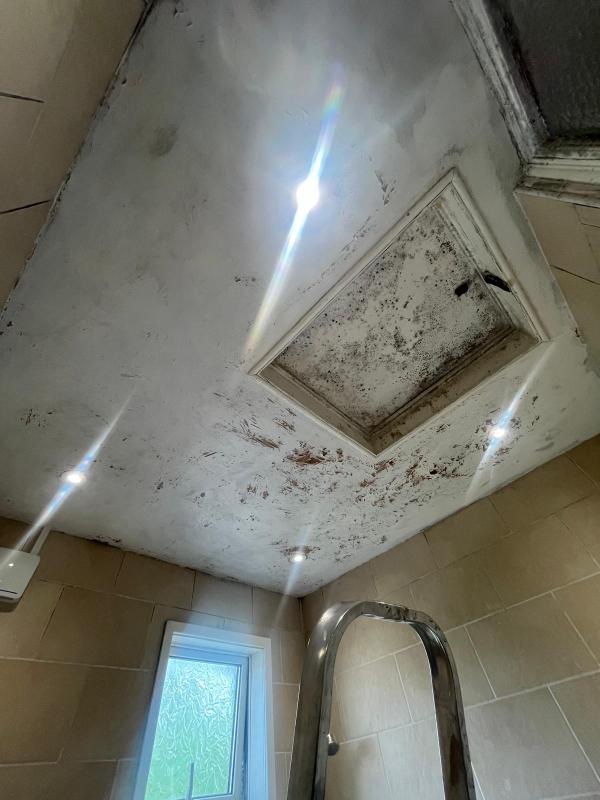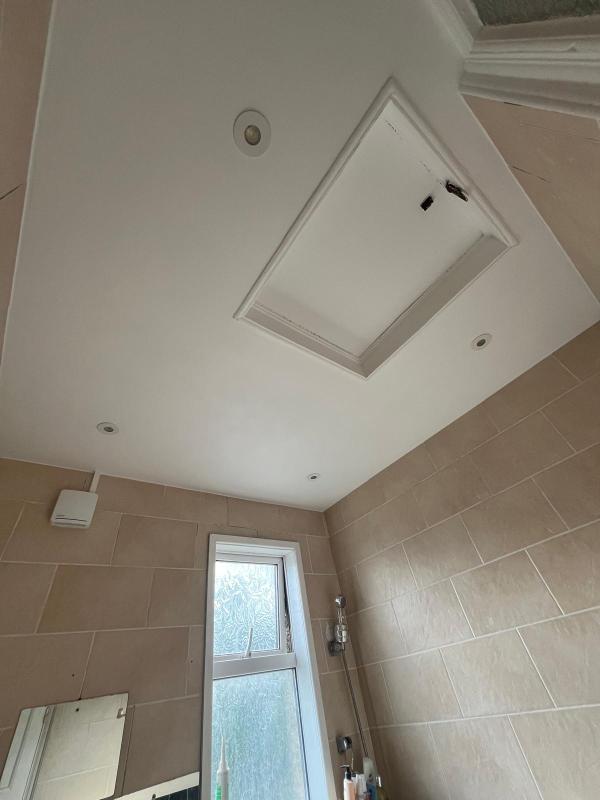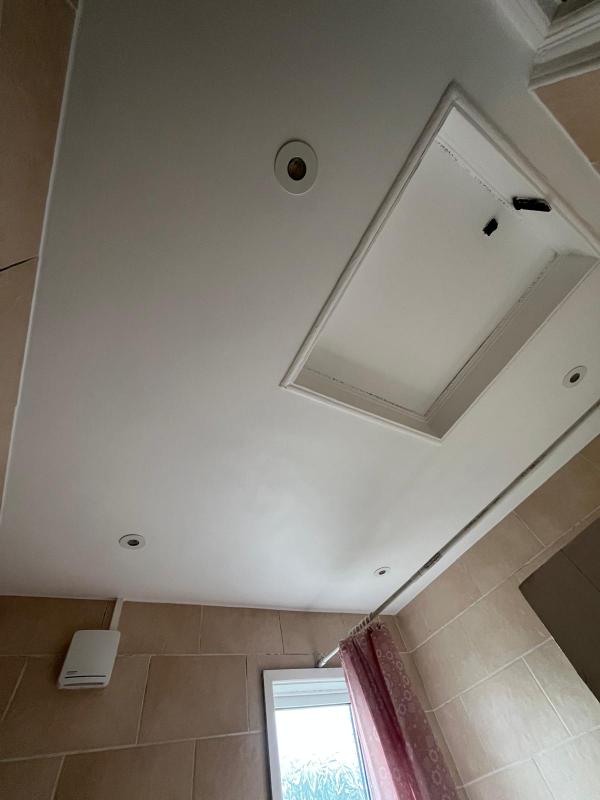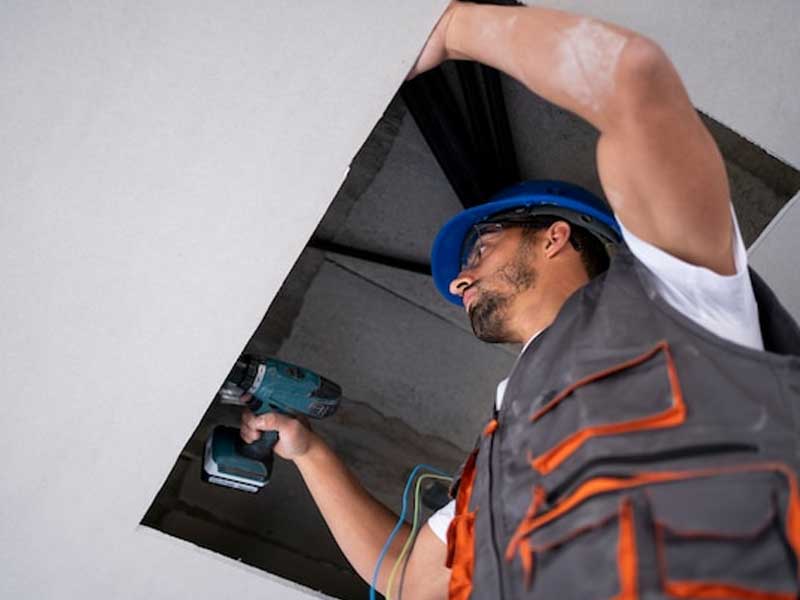
Cracks spreading across your ceiling? Water stains forming from leaks above? Holes left from removed light fittings or loft hatch work? Ceiling damage is impossible to ignore. It’s directly in your line of sight every day. Left unaddressed, minor ceiling problems often worsen. What starts as a hairline crack can become an unsightly network of damage that affects your entire room.
A Handy Hand provides professional ceiling repair services across Enfield, Barnet, Haringey and throughout North London. From small crack repairs and hole filling to water damage restoration and sagging ceiling correction, we restore ceilings to smooth, clean finishes that look as good as new. Our experience with both modern plasterboard and traditional lath-and-plaster ceilings means we handle properties of all ages across the area.
To discuss your ceiling repairs, call us on 020 8103 5151 or email info@ahandyhand.co.uk.
Ceiling damage takes various forms, each requiring appropriate repair approaches. Here’s what we regularly address in North London homes.
Cracks are the most common ceiling complaint. They range from fine hairline cracks barely visible except in certain light to significant fissures that demand attention. Understanding crack causes helps determine appropriate repairs.
Hairline cracks often result from natural building movement, temperature changes causing expansion and contraction, or minor settlement that most buildings experience. These cracks are typically cosmetic rather than structural and respond well to filling and redecorating. Larger cracks may indicate more significant movement. Cracks that follow straight lines often appear along plasterboard joints. This happens where the tape has failed or the boards have shifted. Cracks radiating from corners, around light fittings, or in irregular patterns may suggest different underlying causes.
Recurring cracks that reappear after repair sometimes indicate ongoing movement that simple filling won’t permanently resolve. These situations may need flexible fillers, reinforcing tape, or investigation of underlying causes before repair.
We assess cracks before recommending repairs, ensuring appropriate treatment rather than quick fixes that won’t last. For cracks suggesting structural concerns, we’ll advise seeking a specialist assessment before cosmetic repairs.
Ceiling holes result from various causes and range from small fixture holes to substantial openings.
Small holes from removed light fittings, ceiling hooks, smoke detectors, and similar items need filling and finishing to match surrounding surfaces. These straightforward repairs restore smooth ceilings ready for redecoration. Medium holes from moving electrical points, removing built-in lights, or small accidents require patch repairs. Damaged plasterboard is cut back to the wooden supports, a new piece is fitted, joints are taped and filled, and everything is smoothed out. Larger holes from loft hatch modifications, removed extractor fans, or significant damage need a more substantial repair. These jobs may involve fitting support timbers and cutting plasterboard pieces to precise dimensions. Careful finishing ensures invisible repairs. Access holes created by electricians, plumbers, or other trades working in ceiling voids require proper reinstatement. Once other trades have completed their tasks, we restore the ceilings to their original condition.
Water damage from leaks above creates both immediate problems and lasting damage. Leaking pipes, overflowing tanks, roof leaks, and bathroom failures all cause ceiling water damage.
Water stains remain visible even after ceilings dry, showing brown rings or discolouration that bleeds through ordinary paint. Proper treatment requires stain blocking before redecoration, or stains simply reappear.
Bubbling and flaking paint or plaster indicate that water has penetrated and damaged surface bonding. Affected areas need to be removed and replaced with sound material before repair and refinishing.
Sagging plasterboard results when boards absorb water and lose rigidity. Severely affected sections may need to be replaced entirely. Partially affected areas sometimes recover once dried, but may remain weakened.
Lath and plaster ceilings suffer particularly when water dissolves the plaster key holding material to laths. Once this bond fails, plaster can separate and eventually fall. Water-damaged lath and plaster often needs professional assessment.
Before repairing water-damaged ceilings, the water source must be fixed. We repair ceiling damage but don’t address the plumbing, roofing, or other issues that caused it. Those need to be resolved first to prevent further damage.
Ceilings that bow downward or feel soft when touched indicate structural compromise that needs prompt attention.
Plasterboard sagging may result from inadequate fixing, boards spanning too far between joists, accumulated weight from insulation above, or water damage weakening boards. Repair approaches depend on the extent of sagging and the cause.
Lath and plaster ceiling sagging typically indicates plaster separating from laths as the lime bond fails with age. This is common in Victorian and Edwardian properties, where ceilings are 100 years old or more. Traditional repair involves re-bonding with plaster washers or resecuring with screws, though extensive sagging may need replastering or overboarding.
Minor sagging sometimes stabilises and can be monitored rather than immediately repaired. Significant or progressing sagging needs to be addressed before sections fall, creating safety risks and larger repair requirements.
We assess sagging ceilings carefully, recommending appropriate intervention levels. Sometimes, preventative measures stop deterioration. Sometimes replacement is the only sensible option. Honest assessment guides appropriate action.
Textured ceilings, including Artex and similar finishes, present specific repair challenges. Matching existing textures requires skill, and many homeowners prefer removing texture rather than patching.
Small repairs to textured ceilings involve recreating texture patterns in patched areas. Perfect matching is difficult since application techniques vary and original textures have aged. Repairs may be visible in certain light, even when colour-matched.
Larger repairs or multiple damaged areas often justify removing texture entirely and creating smooth ceilings instead. Texture removal involves skimming over existing finishes or, where texture is thick, scraping before skimming.
Artex applied before the mid 1980s may contain asbestos. We do not disturb materials that may contain asbestos. If your property dates from this period and the texture has not been tested, we will discuss options, including testing or encapsulation rather than removal.
Victorian and Edwardian properties often have decorative ceiling features, including cornices, ceiling roses, and ornate plasterwork. Damage to these features needs careful repair rather than replacement.
Cornice damage from cracks, water ingress, or physical impact can often be repaired in place using appropriate fillers and techniques. Missing sections may need moulding to match existing profiles. We undertake straightforward cornice repairs, though complex or extensive period restoration may need specialist plasterers.
Ceiling rose repairs follow similar principles. Cracks are filled, damaged sections are rebuilt where possible, and finishes are restored. Original features add character and value, making repair preferable to removal or replacement with modern alternatives.
Coving in more modern properties is typically simpler to repair or replace. Damaged sections can be cut out and new coving fitted to match, with joints filled for a seamless appearance.
Different construction methods create different ceiling types, each with specific repair requirements. North London’s varied housing stock means we encounter all types regularly.
Victorian and Edwardian properties typically have traditional lath and plaster ceilings. Thin wooden laths fixed to joists receive multiple coats of lime plaster that key through the gaps between the laths. When intact, these ceilings are durable and have good acoustic properties.
Age, building movement, water damage, and vibration all cause lath and plaster to deteriorate. The plaster key breaks, causing separation and eventual sagging or collapse. Cracks develop along natural weak points and where movement concentrates.
Repairing lath and plaster requires understanding traditional construction. Small repairs use appropriate lime-based materials compatible with the original plaster. Larger repairs may involve cutting back to sound areas, fitting new laths if needed, and properly building up plaster coats.
Many lath and plaster ceilings have been overboarded with plasterboard at some point. This adds weight that sometimes accelerates deterioration beneath. When overboarded ceilings have problems, assessing the original ceiling condition underneath guides repair decisions.
Properties built from the 1950s onward typically have plasterboard ceilings. Boards are fixed to joists, joints are taped and filled, then surfaces receive skim plaster or direct decoration. If you are planning work on ceilings, identify your existing system—dot-and-dab or suspended grid—and choose materials or methods accordingly to ensure the best results.
Plasterboard repairs are generally more straightforward than lath and plaster. Damaged sections cut out cleanly, new pieces fit precisely, and joints can be made invisible with proper taping and filling. Skim finishes restore smooth surfaces.
Different board types have different characteristics. Standard boards, moisture-resistant boards in bathrooms, and fire-resistant boards, when required, all look similar but behave differently. Replacement sections should match the original board types.
Some properties, particularly converted commercial buildings or 1970s constructions, have suspended ceilings with tiles or panels in grid frameworks. These create voids above for services and sometimes insulation.
Damaged tiles or panels are usually replaced rather than repaired. Sourcing matching replacements can be challenging for older or unusual systems. Grid framework repairs are straightforward when components are standard.
Suspended ceilings sometimes conceal original ceilings above. Removing suspended systems and restoring original ceilings appeals to some property owners, though the condition of what’s hidden varies considerably.
Here’s how ceiling repair projects typically proceed with us.
We examine damage carefully, understanding what’s happened and why. This includes checking the ceiling type, identifying the causes of damage where possible, assessing the extent of the problems, and considering what’s above the ceiling. For water damage, we confirm leaks have been resolved before planning repairs.
Based on the assessment, we recommend appropriate repairs. This might range from simple filling and repainting for minor cracks to section replacement for significant damage. We explain options clearly, including why we recommend particular approaches and what alternatives exist.
Ceiling work creates dust and debris. We protect floors, furniture, and belongings with dust sheets and coverings. For larger jobs, we may recommend clearing rooms before we arrive. We aim to contain the mess, but ceiling repairs inevitably generate some disruption.
Repair approaches vary with damage type. Cracks get opened up if needed, filled with appropriate materials, and sanded smooth. Holes get patched with plasterboard or plaster, depending on the ceiling type. Skim coats create smooth surfaces over repairs. Each stage needs proper drying time before proceeding.
Repaired areas get primed and painted to match the surroundings where possible. For localised repairs, colour-matching existing decoration can be challenging because paint fades over time. We discuss finishing options, including full ceiling repainting for seamless results.
We clean as we go and thoroughly at completion. Dust sheets are carefully removed to contain debris. Work areas get vacuumed and wiped. You shouldn’t need to clean up after us, though some fine dust settling is inevitable with ceiling work.
Several factors affect ceiling repair planning and outcomes.
Repaired sections need blending with the surrounding areas. For smooth ceilings, skilled filling and sanding achieve seamless results. For textured ceilings, matching patterns exactly proves more difficult. Paint colour matching depends on how much existing decoration has faded.
Perfect invisible repairs are often achievable, but sometimes patch repairs remain slightly visible in certain lighting conditions. We discuss realistic expectations for specific repairs before starting.
Full ceiling repainting after repairs ensures consistent colour and finish throughout. This adds cost but delivers the best results, particularly in living spaces where ceiling appearance matters most.
Ceiling repairs require safe access. Standard ceiling heights allow work from stepladders or low platforms. Higher ceilings may need tower scaffolds or specialist access equipment. Access requirements affect project pricing and scheduling.
Room contents and floor protection need consideration. Heavy furniture may need to be moved to create working space and protect it from dust. We discuss access and preparation requirements when quoting.
Plaster, filler, and paint all need drying time. Rushing between stages can lead to cracking, poor adhesion, and visible defects. Ceiling repairs often span multiple visits to allow proper drying between stages, particularly for larger jobs or multiple coats.
Weather and heating affect drying times. Cold, damp conditions significantly extend drying. Well-ventilated, moderately warm rooms cure repairs fastest. We advise on timing and conditions for best results.
Buildings that are actively moving present repair challenges. Cracks caused by ongoing movement may reappear after repair. Flexible fillers accommodate some movement but have limits. Addressing the underlying causes of movement, where possible, prevents recurring problems.
Some movement is seasonal, with buildings shifting between summer and winter as materials expand and contract. Timing repairs for after annual movement cycles can improve longevity. For persistently recurring problems, we discuss whether a structural investigation might be worthwhile.
Not all ceiling damage justifies repair. Sometimes replacement makes more sense.
Damage is localised rather than widespread. Ceiling structure remains sound overall. Original features worth preserving exist. Budget constraints favour targeted repairs. Building movement has stabilised.
Most ceiling problems we encounter suit repair rather than replacement. Cracks, holes, water stains, and moderate damage all respond well to proper repair techniques without needing wholesale replacement.
Damage is extensive across large areas. Structural integrity is compromised throughout. Multiple previous repairs have failed. Ceilings are significantly sagging or unsafe. The cost of repeated repairs approaches the replacement cost. Property renovation provides an opportunity for an upgrade.
Replacement typically means overboarding existing ceilings with new plasterboard, or in some cases, completely removing old ceilings and starting fresh. This is substantial work with greater cost and disruption, but delivers entirely new surfaces.
We advise honestly whether repair or replacement suits your situation. We don’t push replacement when repair works, but we won’t recommend futile repairs when replacement is genuinely needed.
Some ceiling situations fall outside our scope.
Major structural repairs involving ceiling joists, load-bearing elements, or significant reconstruction need structural assessment and specialist contractors. We handle surface and minor structural repairs, but not major structural work.
Asbestos-containing materials require licensed specialists for removal. If your textured ceiling dates from before the mid-1980s and hasn’t been tested, we’ll discuss options. We can encapsulate by overboarding but won’t disturb potentially asbestos-containing materials.
Complete ceiling replacement throughout properties is specialist plastering work beyond the general handyman scope. We handle room-by-room repairs and moderate replacements, but not whole-house ceiling replacement.
Historic building restoration requiring conservation-grade materials and techniques needs specialist heritage plasterers. We undertake straightforward repairs to period features, but complex restoration falls outside our expertise.
We’re honest about our scope. When situations require specialists, we’ll let you know and, where possible, recommend appropriate contractors.
Some ceiling damage is preventable with proper care and prompt attention to problems.
Water damage worsens the longer leaks continue. Fixing plumbing problems, roof issues, and bathroom failures quickly minimises ceiling damage. Even small drips cause cumulative problems over time.
New cracks or cracks that grow warrant attention before they worsen. Photographs or crack monitors help track changes over time. Early repair prevents small problems from becoming large ones.
Heavy items stored on ceilings, people walking on ceiling joists rather than boards, and excessive insulation weight all stress ceilings. Proper loft boarding and careful use reduce ceiling loading.
High humidity causes problems, including paint failure and plaster damage. Adequate ventilation in bathrooms and kitchens, proper use of extractor fans, and avoiding excessive moisture help reduce humidity-related ceiling problems.
Periodic ceiling inspection catches developing problems early. Look for new cracks, discolouration, soft spots, and sagging. Catching problems early makes repairs simpler and cheaper.
We provide ceiling repair services throughout Enfield, Barnet, Haringey and surrounding North London areas. Our experience spans the full range of properties across the region, from Victorian terraces with original lath and plaster to modern developments with standard plasterboard.
Our coverage includes Southgate, Finchley, Edmonton, Tottenham, Palmers Green, Cockfosters, Wood Green, Muswell Hill, East Barnet, New Barnet, Bounds Green, Arnos Grove, Oakwood, Winchmore Hill, and neighbouring areas.
North London’s older housing stock means we regularly work with lath and plaster ceilings requiring traditional repair approaches. We understand period property construction and repair appropriately, rather than applying modern methods unsuited to traditional buildings.
Ceiling repair costs depend on the extent of damage, ceiling type, access requirements, and finishing standards needed. We provide detailed quotations after understanding exactly what your project involves.
Small repairs like filling cracks or patching single holes can be completed quickly at a lower cost. Larger repairs involving section replacement, extensive preparation, or multiple rooms take longer and cost accordingly. Full ceiling repainting after repairs adds to costs but delivers the best finished results.
We quote before starting so you know exactly what to expect. There’s no obligation, and quotations help you budget effectively. Contact us describing your ceiling problems for accurate pricing.
Duration depends on repair extent and drying requirements. Small crack repairs might be completed in a single short visit. Larger repairs involving filling, skimming, and painting often span multiple visits over several days to allow proper drying between stages. We provide time estimates with quotations.
Matching textured ceilings is challenging. We can recreate common patterns, but perfect matching is difficult since application techniques vary and original textures have aged. For textured ceilings, we discuss whether patching or removing texture entirely suits your situation better.
For smooth ceilings with proper finishing and painting, repairs typically become invisible. For textured ceilings or when only partial repainting is done, some visibility is possible under certain lighting conditions. We discuss realistic expectations for your specific repairs.
Yes, once leaks are fixed and ceilings have dried thoroughly, we can repair water damage. Drying can take several weeks, depending on the extent of water and conditions. Attempting repairs before ceilings are fully dry can lead to adhesion and finish problems.
Significant sagging, multiple large cracks, soft or bouncy areas, and visible joist problems may indicate structural issues. Minor cracks and small repairs typically aren’t structural concerns. We assess during quotation visits and advise honestly if a structural investigation seems warranted before cosmetic repairs.
We protect furniture and flooring with dust sheets, but clearing the room makes work easier and protects belongings better. For extensive ceiling work, we recommend removing furniture and valuables if possible. For small localised repairs, protection in place usually suffices.
Damaged ceilings are impossible to ignore and affect how your entire room looks and feels. Whether you’re dealing with spreading cracks, water stains, holes from previous work, or sagging areas, professional repair restores ceilings to proper condition.
A Handy Hand provides ceiling repairs across North London, handling everything from minor crack filling to significant damage restoration. We work with all ceiling types, understand period property construction, and deliver quality finishes that last.
Call 020 8103 5151 or email info@ahandyhand.co.uk to discuss your ceiling repairs.